🏃♂️ Felt winter coming on today’s run with temperatures hovering around freezing

🏃♂️ Felt winter coming on today’s run with temperatures hovering around freezing
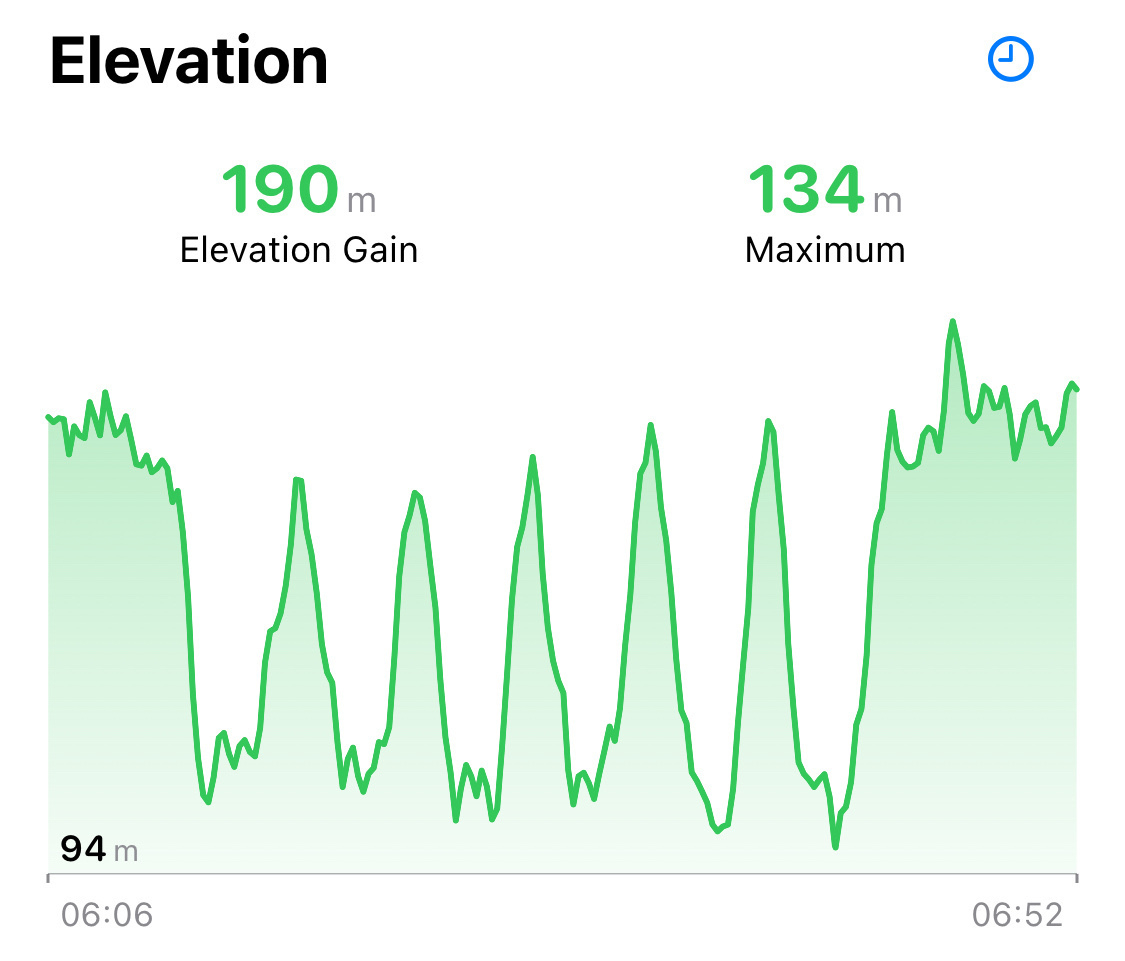
🏃♂️ Hill repeats at a steady, moderate pace for today’s run. I tried to focus on my downhill form: staying loose and keeping ground contact time short
As a follow up to my list of default apps, I have a few non-default apps that weren’t on the original list from Hemispheric Views.
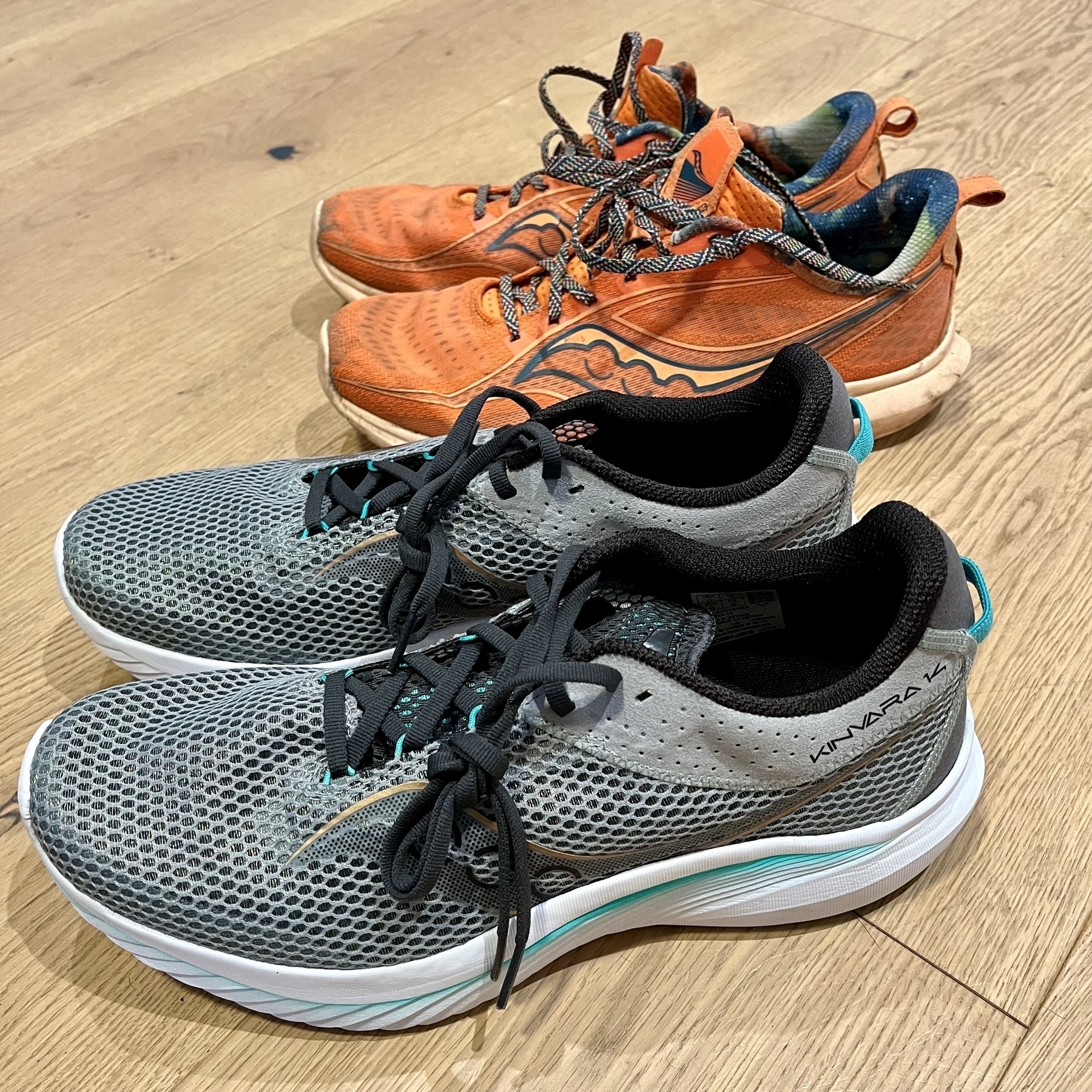
New running shoe day! After 1,109 kms, I’m replacing the orange ones with another pair of Saucony Kinvara. I definitely don’t recommend waiting so long, just got distracted 🏃♂️
There’s a bewildering array of fitness apps out there. Here’s an attempt to document what I’m currently using.
I have some criteria when considering a fitness app:
With these in mind, my current portfolio of fitness apps is:
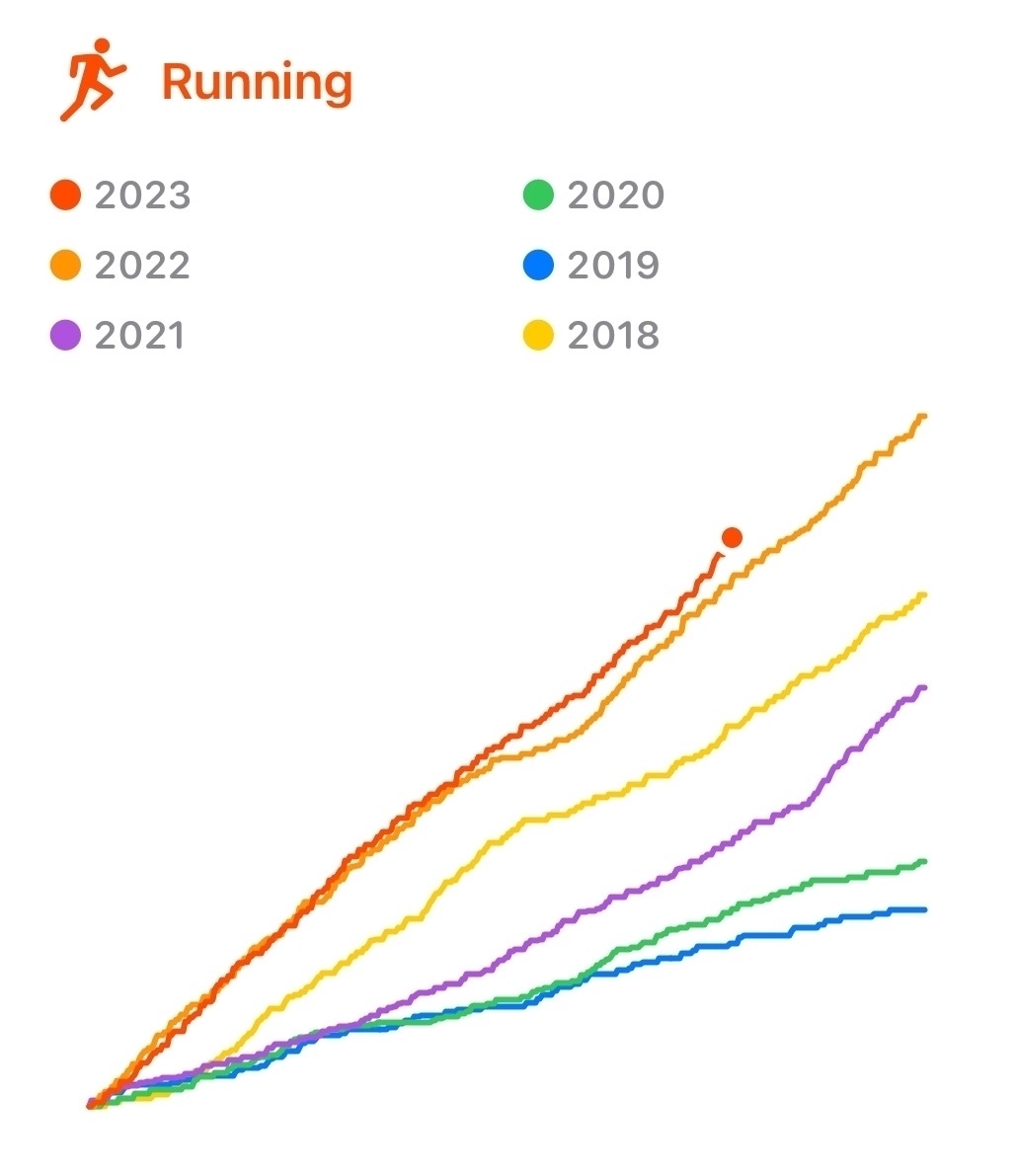
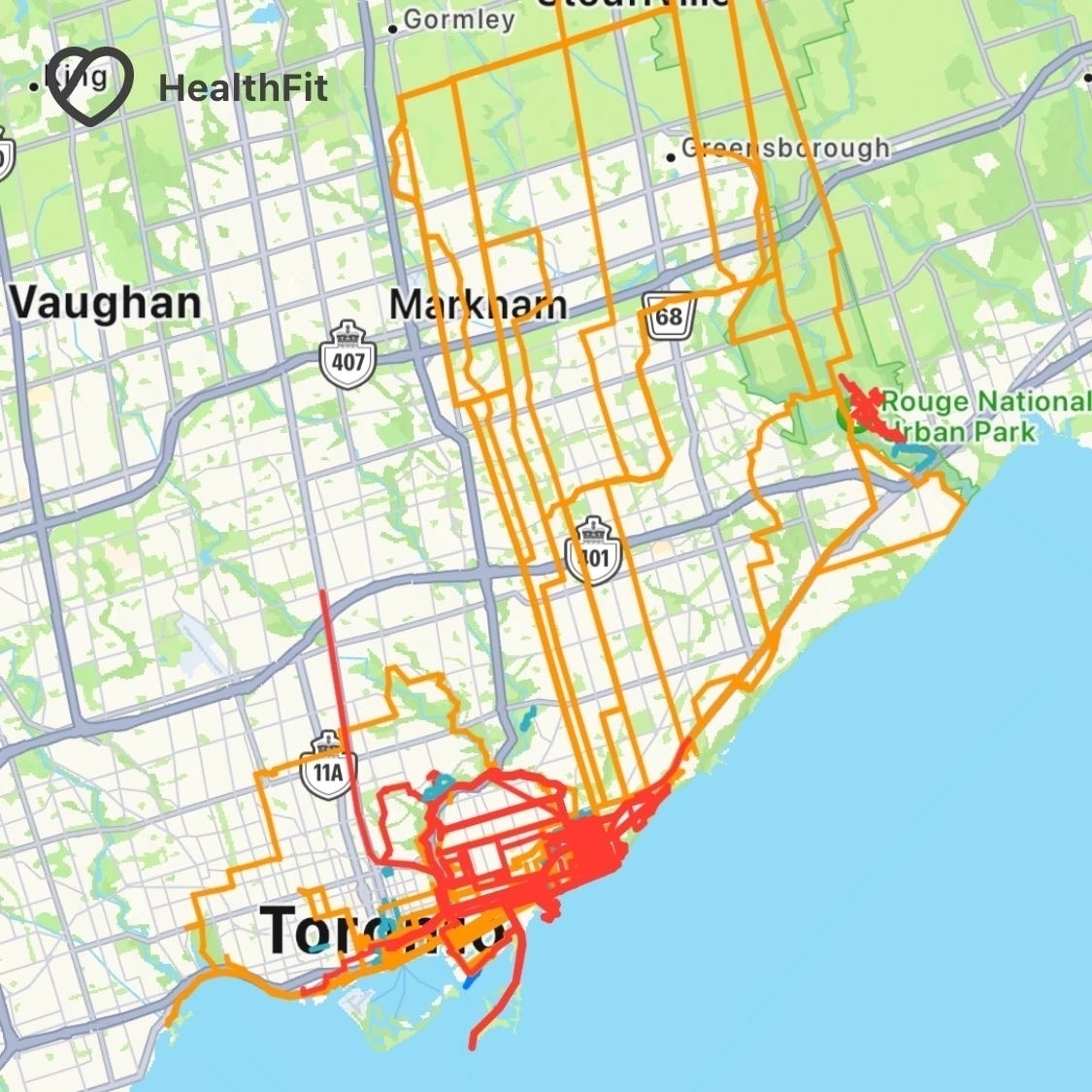
That’s currently it for the portfolio. Being able to consolidate all of my data into Apple Health really frees me up to try new apps without worrying about data lock in. Despite this freedom, I’m comfortable with the current set and don’t plan to switch things up anytime soon.
🏃♂️ Starting to see the Fall colour changes on today’s run. Powered by PUP and Rage Against the Machine

🚴♂️ Likely the last ride of the season with this crew. Getting too dark! Unfortunately we had to end early, thanks to a flat tire.

GPS Watch? No Thanks. Top Runners Are Ditching the Data.
For many, GPS watches are a remarkably useful training tool. But there are other runners, including world-class runners like Jacobs, who have a hard time understanding the fuss. To them, a smorgasbord of data is more hindrance than help. And get this: Some runners don’t wear watches at all.
I’m sympathetic to this idea. In general, I’m trying to stop obsessing over my health and fitness data (tough for this data analyst to do). That said, I’m far from an elite runner. So, I don’t have enough body awareness to intuitively know my pace zones and find realtime data on my performance helpful for making sure my runs are effective.
Perhaps more importantly, my watch is also my source of music and a way to keep my family updated when I’m out on a long run.
I don’t expect to be running out the door without my watch anytime soon.
🏃♂️ Today’s run was an endurance run with a progressive fast finish. I tried breathing through my nose for the first hour to keep things slow.
Powered by Billy Talent and Beastie Boys

Found another long run loop 🏃♂️
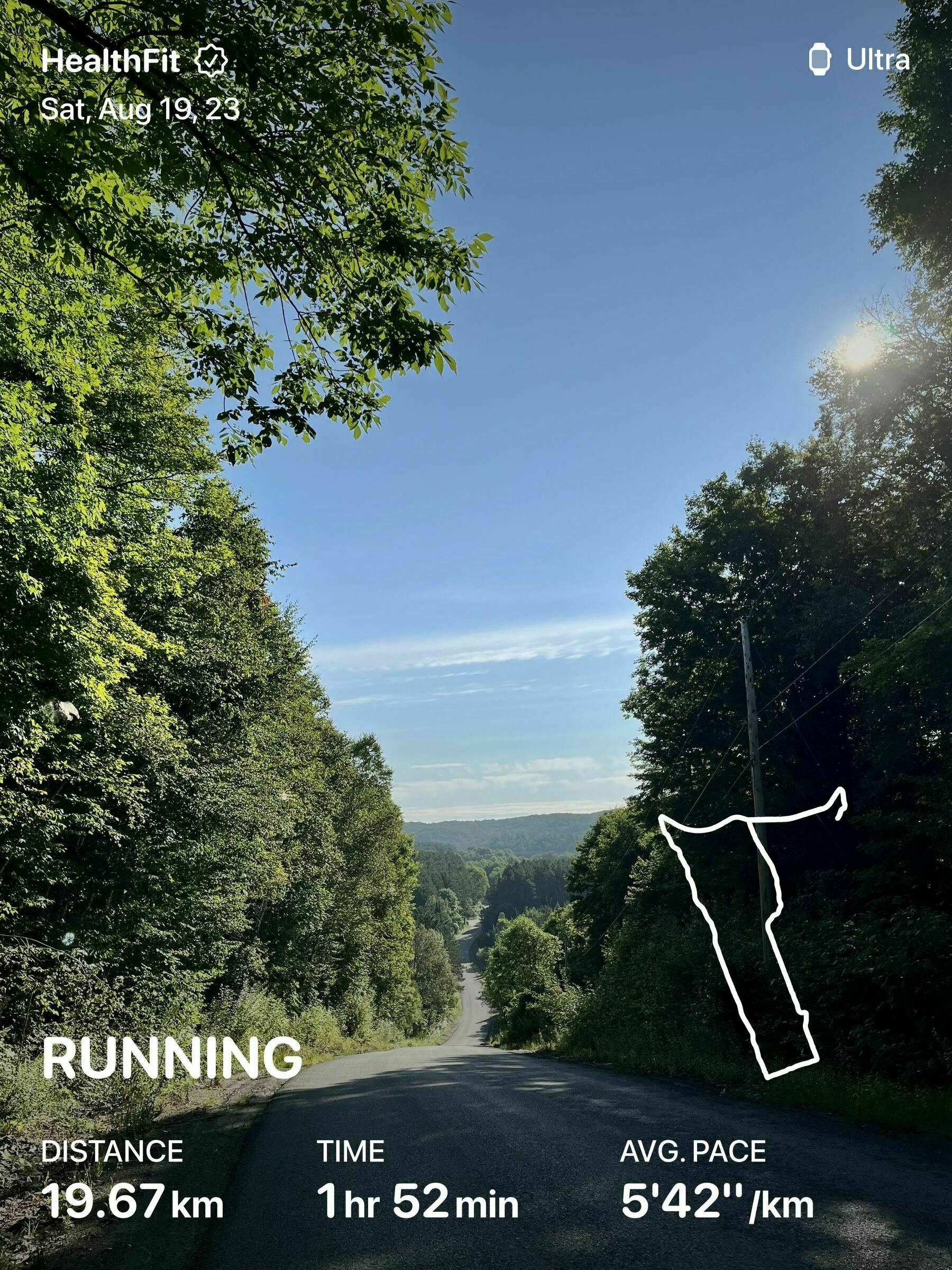
My longest swim yet 🏊♂️
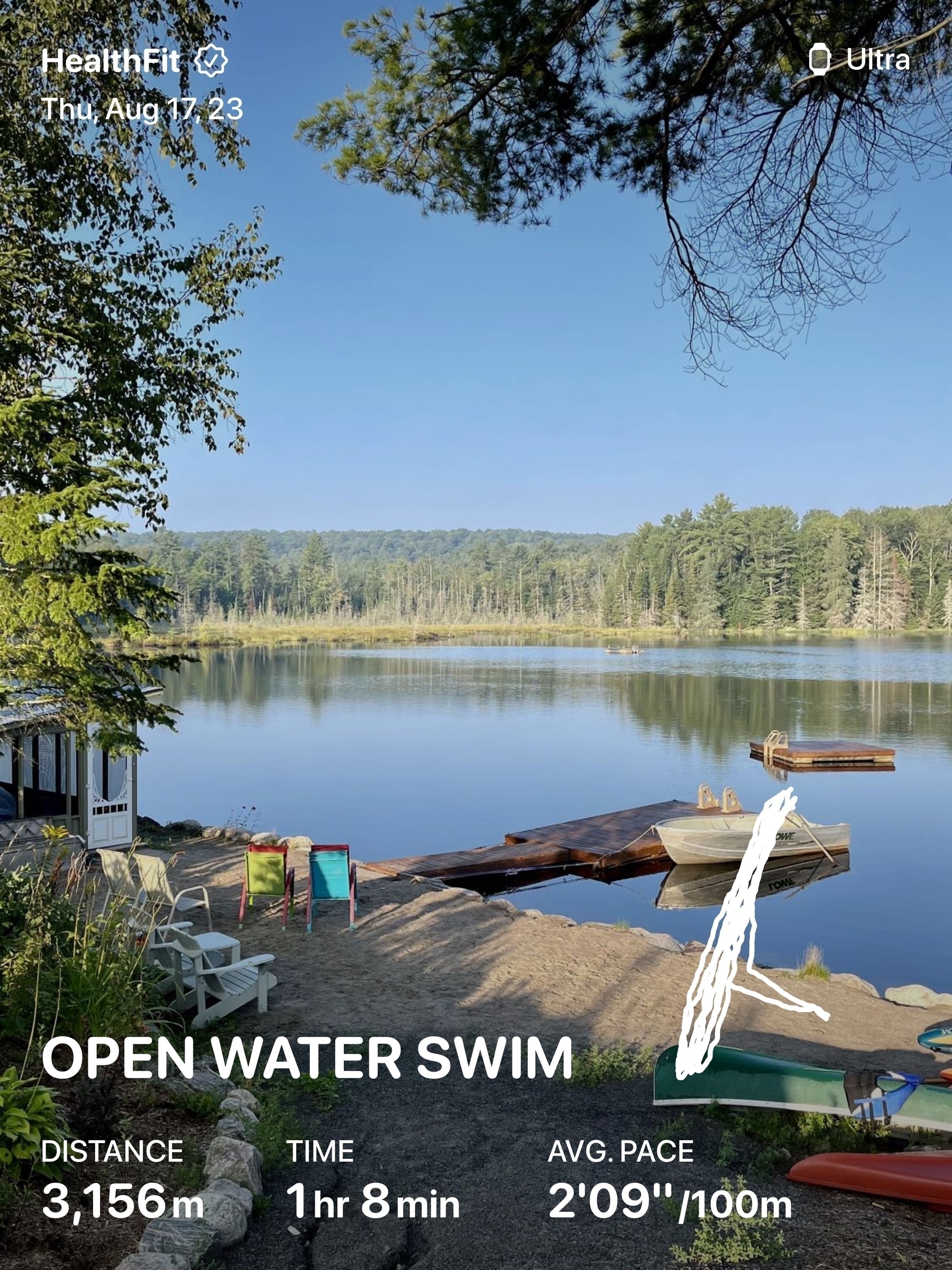
Tried a new route today 🏃♂️
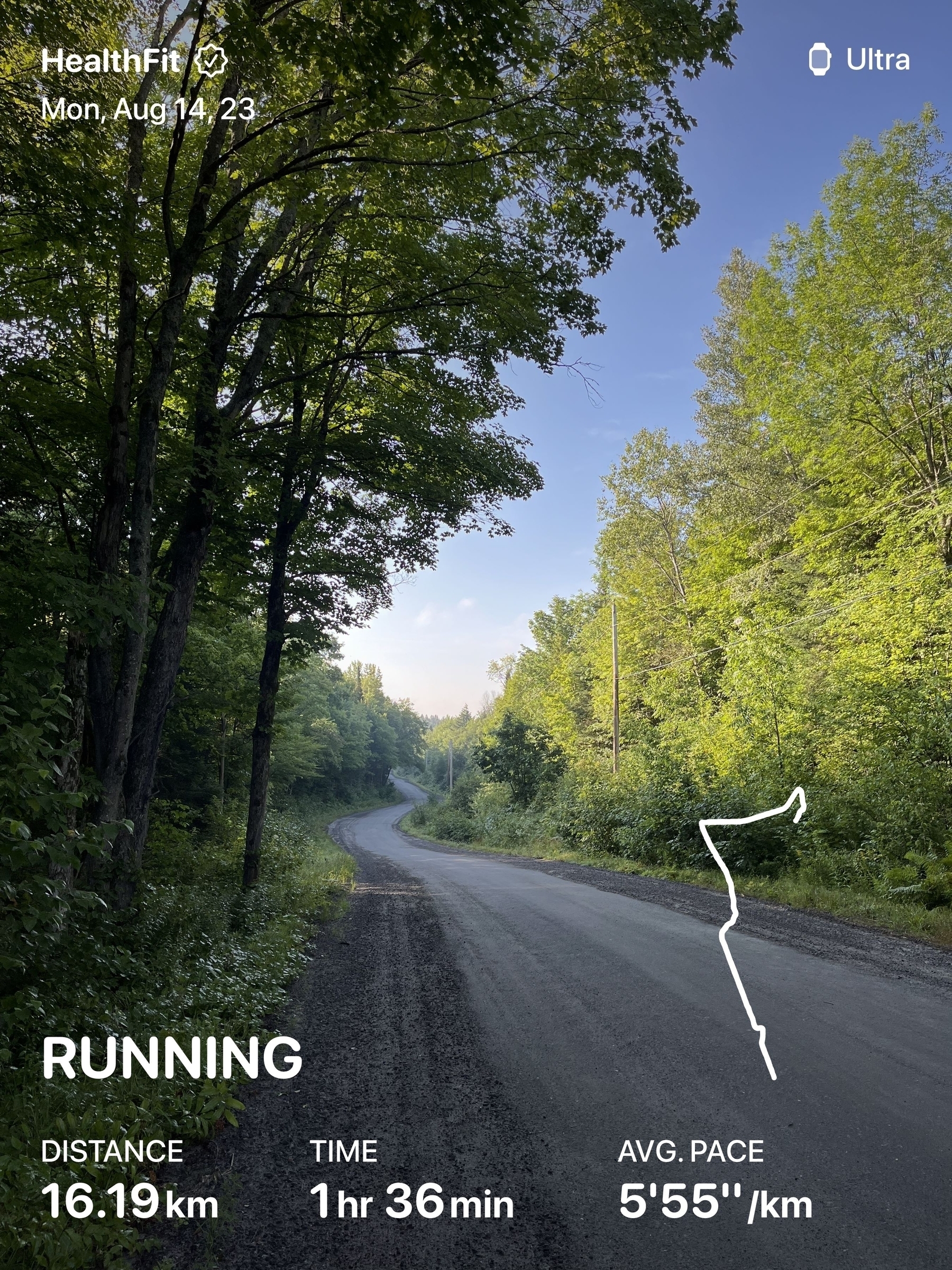
Highlight of the vacation is having access to a lake and the time for longer swims 🏊♂️
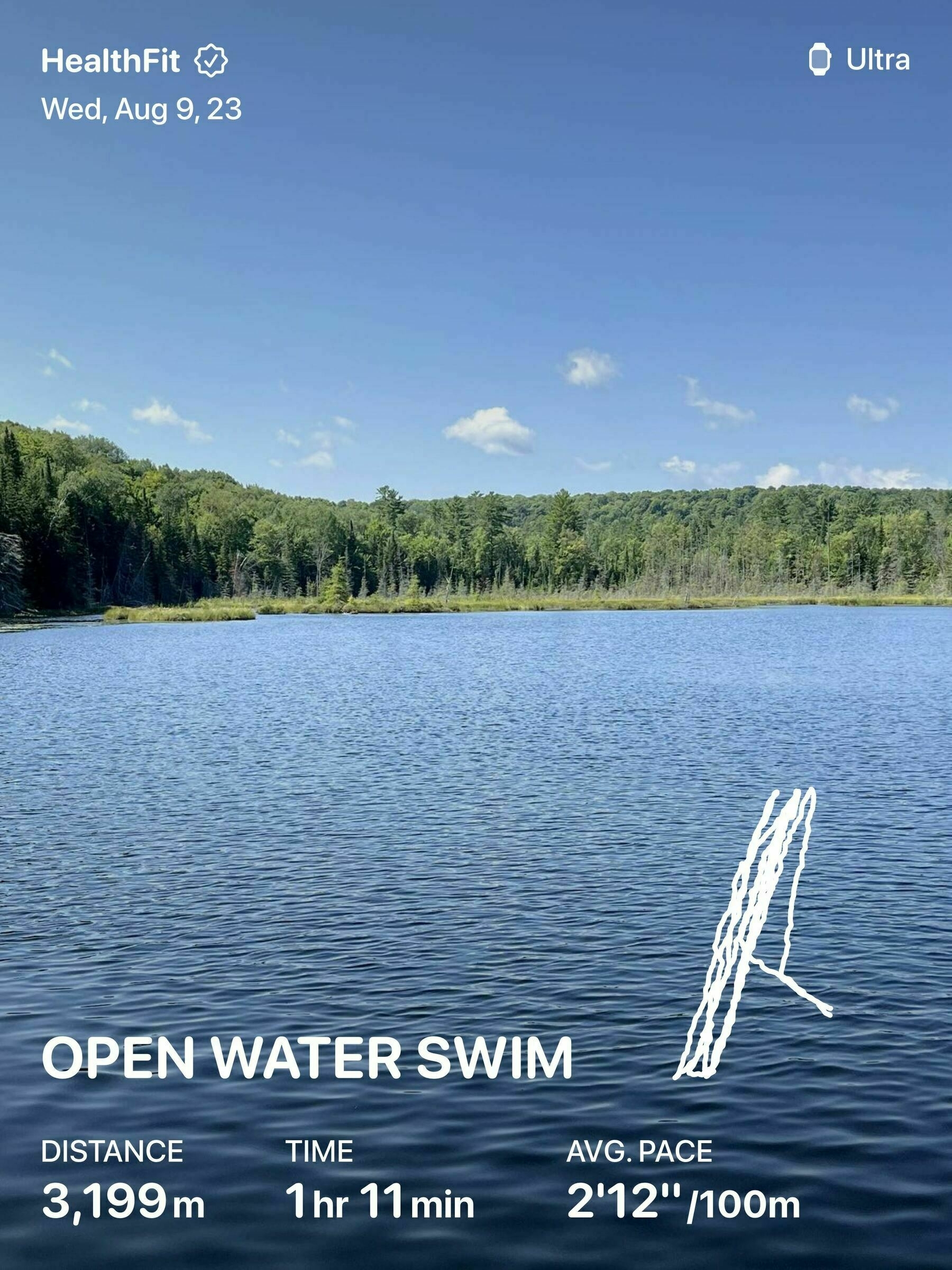
After a few weeks of recovery, here are a few notes on the Huntsville 70.3 Ironman.
The short version (given there’s lots of details below) is that the course was fantastic, though very hilly, and I managed to shave 15 minutes from my last 70.3.
No surprises here. There were scheduled times for registration and all we needed was the receipt from our online payment. With that, they handed over a wristband, timing chip, stickers for my bike and helmet, a hot-pink swim cap for my age group, t-shirt, and a morning gear bag for transferring clothing from the swim start to the run finish.
Next up was dropping my bike off at the transition. There were two stickers for the bike, both of which had my bib number on them and matched the number on my wristband. Staff at the transition entrance used these to make sure the bike belonged to me, before letting me in. Then I tracked down my transition spot, which was nicely equidistant from the swim, bike, and run entrances.
That was it for the Saturday events, other than eating some tasty Thai food and getting a good night’s sleep. Sunday (race day) started early, so that I could set up my transition area by 6:30. I took about 10 minutes to get everything organized and visualize how I’d move through the zone.
We were organized into age groups for the swim start. As one of the older groups, we started 20 minutes after the first wave. We waded into the lake and floated around the start line, until they announced our group and we started swimming.
The water was a nice, cool temperature and I felt good throughout. The last third of the swim was in the river between Fairy Lake and Lake Vernon. So, we got pretty crowded and had to manage a fair bit of contact.
In previous triathlons, I’ve had trouble with dizziness when getting out of the water. This time I increased my rate of kicking for the last five minutes or so to get the blood moving around again. This seemed to really help and I had no issues with being light headed this time.
The swim ended with a long 500m run along pavement into the transition zone. During this, I was able to wiggle out of the top half of my wetsuit, in preparation for the rest of the transition. Once I was at my transition spot, I pulled off the wetsuit and quickly consumed one caffeinated gel. Then helmet and bike shoes on, and grabbed the bike to run out to the bike mount line.
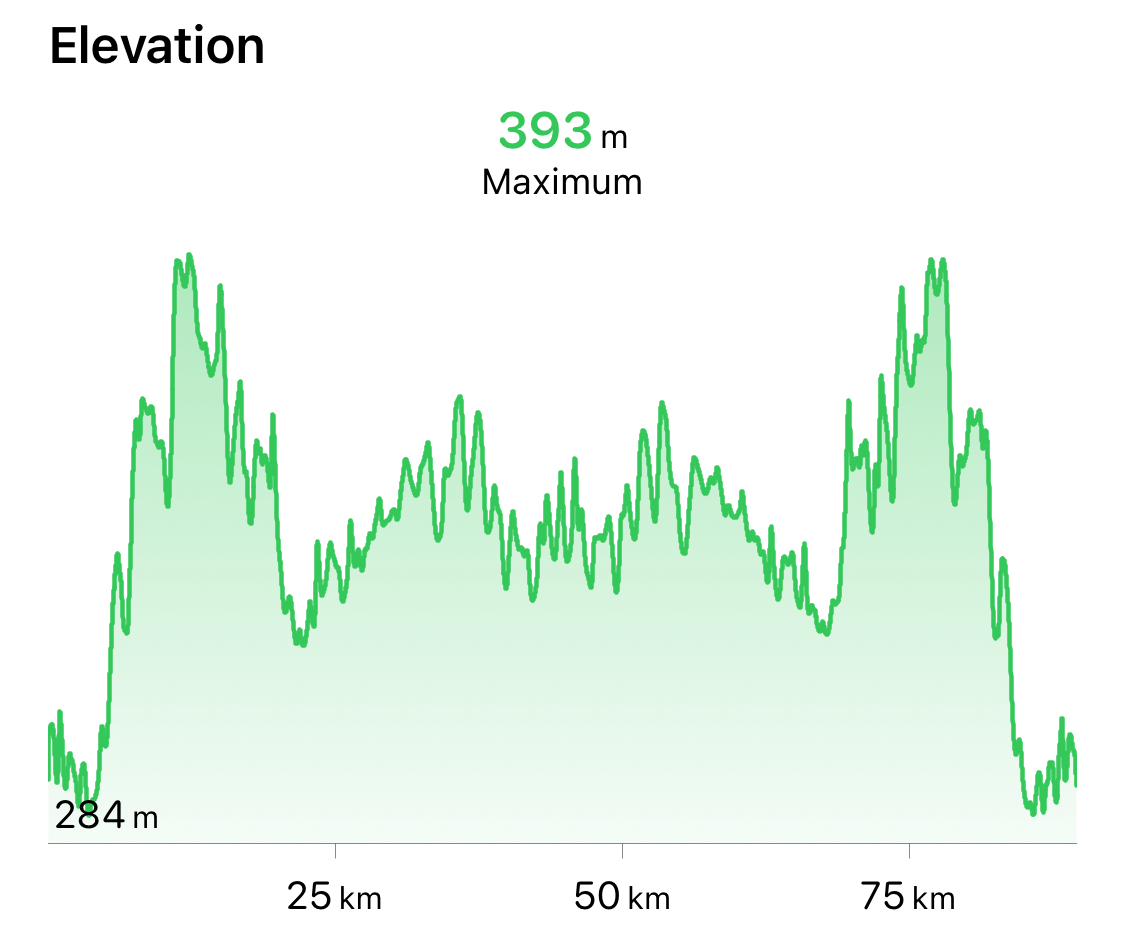
There was light rain during the swim which left the start of the bike course a bit wet and slippery. After a kilometre or so, that dried off and the bike course was gorgeous with lots of hills through the Canadian Shield. By the end, we’d accumulated 1,100 m of elevation and it was important to manage the effort and not burn out. I stuck with a heart rate target of 155 for most of the course with a few exceptions for the bigger hills. That left me with lots of energy for the run after about 2 hours and 50 minutes of riding.
I had a 750mL bottle of electrolytes and 500mL bottle of water on the bike that I consumed throughout, along with a Cliff bar and two energy gels.
The bike course was open to traffic, so we had a few cars to contend with. But, they were very careful and I didn’t see any issues.
T2 was straightforward. I racked my bike, took off my helmet, and switched to running shoes and a hat. One more caffeinated gel and off I went.
My plan was to maintain a 5:30 minutes/km pace for the run with an emphasis on keeping it slow after the bike transition. I immediately had to slow down even more though, as the course starts off with a really steep uphill.
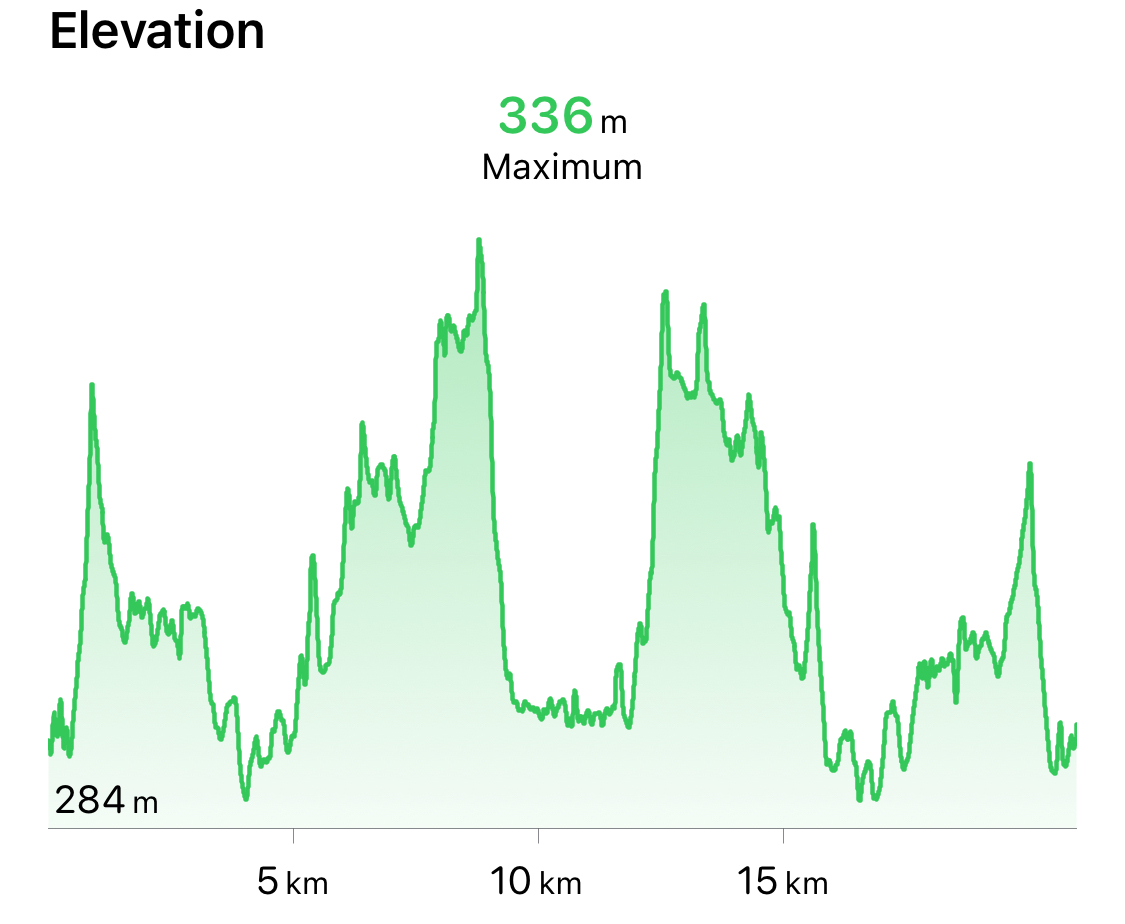
This was followed by a steady uphill from about km 5 to 10 with a big downhill and then back up again on one very steep hill. I came close to walking on this one, but managed to keep a slow pace all the way up.
In Tremblant, I intentionally walked through each aid station on the run. This time I ran through each with one water doused onto my head and one Gatorade to drink.
I’d planned for two gels on the run: the first around km 8 and second around km 14. Somehow I managed to loose one though. As a result, I came very close to hitting the wall on the last 3 km of the run. After a real struggle through km 18, I was able to pull it back together well enough to finish in 1h58m.
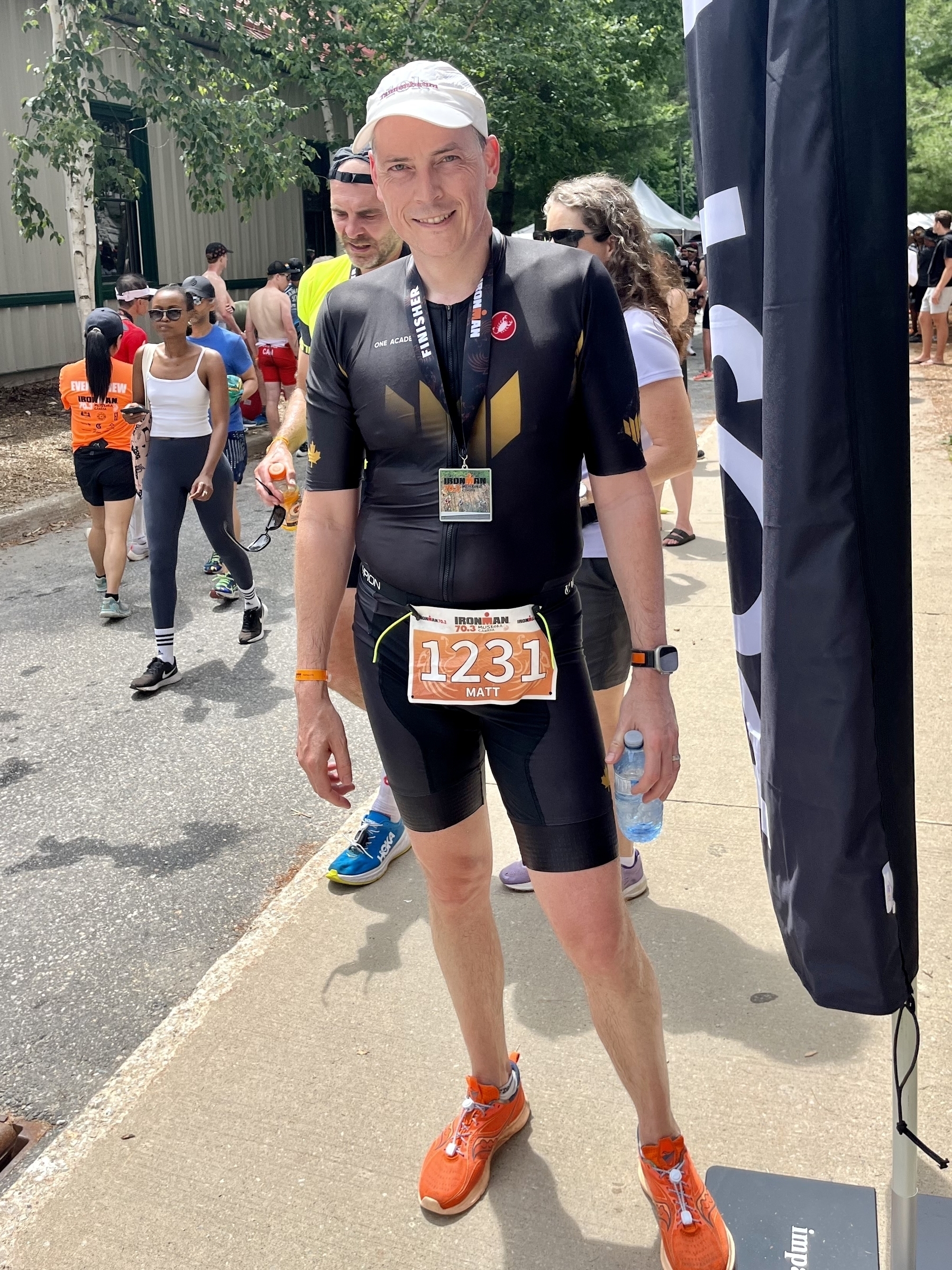
I’m happy to have improved my time from the Tremblant 70.3. I was in the top third for my age group and top quarter overall. So, well within my top half goal. More importantly though, I was able to enjoy the experience (excluding km 18 of the run).
Just one lesson learned: pack an extra gel or two. They don’t take up much space and the consequences of insufficient fuel are significant.
Here we go again 🏊♂️🚴♂️🏃♂️

🏃♂️ Today’s run had no distance or pace goal. A run with no plan is usually a bad idea. This one ended up being longer than it likely should have been

That was fun! Really well organized, friendly racers, and great weather. There were 466 racers, though other than the parking lot, it didn’t seem crowded.
Mass start by age group for the swim. Temperature was quite nice. Other than an elbow to the nose coming around the last buoy, a pleasant swim 😀.
The course confronts you almost right away with a steep 320m climb up the escarpment that really tests the legs. After that, some nice rolling hills, until you come back down the escarpment, hanging on for dear life, as you hit about 70 km/hr. Terrifying and exhilarating end to the ride.
Mostly in wooded trails which is nice. Though still has some hills. Since it is only 7K, you can push it, if anything is left in the legs from the bike.
These didn’t go very well. I was rather dizzy coming out of the swim and struggled with balance while getting the bike shoes on in T1. This has happened before and is something I should be training for. So, 3:21 on this one.
Then 2:09 at T2 while I fiddled with my shoe laces. I really should have switched these to elastics. Just didn’t get around to it.
I kept is simple: one caffeinated gel at each of the two transitions and a Nuun in the water bottle for my bike.
This was my first event with the Apple Watch Ultra. Battery life (the main reason I got one) was excellent. I was at about 90% charge the night before, wore it to track sleeping, and then got to the end of race day around 9pm with close to 60% charge.
I also really liked the Triathlon workout in the Multisport category. The automatic transitions worked really well, marking when I started and stopped each component of the race. So, all I had to do was hit the action button at the start of the swim to start the workout tracking and then stop the workout at the end of the run. Everything else worked automatically. Nice to not have to worry about fiddling with the watch at each transition.
🥱 This justifies a nap

🏃♂️Nice zone 2 run with some pickups

🏃♂️ Good trail on today’s long run. Fun to slog through mud on occasion

The whimsy of Zwift distracts from the difficulty 🚴♂️

🏊♂️🚴♂️🏃♂️ I’ve cancelled my Strava subscription. This isn’t directly caused by the price increase (though a 100% increase is big!), rather this was a good reason to reconsider the service. Most of the Strava features that I’ve found useful (detailed analytics for the most part) I can also get from the built-in Apple Fitness metrics, augmented by the HealthFit app. So, I’m not seeing the value in keeping the subscription. I’ll keep using the app, though, since I do appreciate the social aspects of the service.
My 2022 focussed on fitness. Strava helpfully summarizes this as over 4,000 km travelled with 1,600 🏃♂️, 2,500 🚴♂️, and 100 🏊♂️. Plus 🏋️♂️ and essential 🧘♂️ sessions. I’ll build on this in 2023 while striving for balance

🏃♂️ Nice run along the river. I’m glad it has warmed up a bit

🏃♂️ Running in fresh snow can be nice. The ambient noise of the city is muffled and the snow cushions your foot striking the ground ❄️

🏃♂️ I expected the rain on today’s zone 2 trail run. The hail and wind gusts were a surprise. Hard to hold zone 2 while being pummelled by ice! 💨🌧️🥶


🏃♂️An easy, zone 2 run today. Almost dark by 5pm

🏃♂️ I’d planned for an easy zone 2 run this morning. Picked the wrong running group though. Time to update my zones anyway. I likely shouldn’t be able to hold zone 5 for so long

Other than knowing if I was physically capable of finishing, the main source of uncertainty when I signed up for my first triathlon was how much it would cost. Starting out, I had one pair of running shoes and some goggles from my kids’ swimming lessons. So, I knew I’d need to invest in a lot of gear.
Here’s the list of what I ended up buying along with some commentary. Of course it is important to note that these costs can vary widely, based on what you may already have and the budget you’re willing to spend. For several of these items, there’s a very wide range of costs from barely good enough to really fancy. I tended towards the medium-low end of the distribution: enough to get good, reliable equipment, but far away from top end. I figured I should at least finish one triathlon before investing too much money in equipment.
All amounts are in Canadian dollars and rounded to something reasonable.
Total: $800
Total: $5,600 (yikes)
Total: $400
Some odds and ends:
Total: $3,400
In the end, about $10,000! Seems like a lot (and it is), though it was spread out over 8 months. Plus, this was essentially my only hobby and leisure activity for that time. Nonetheless, I’m grateful to my family for putting up with this.
I’m enjoying these Yoga for Every Runner sessions in Apple Fitness. I’m certain that mobility is important for staying active 🏃♂️