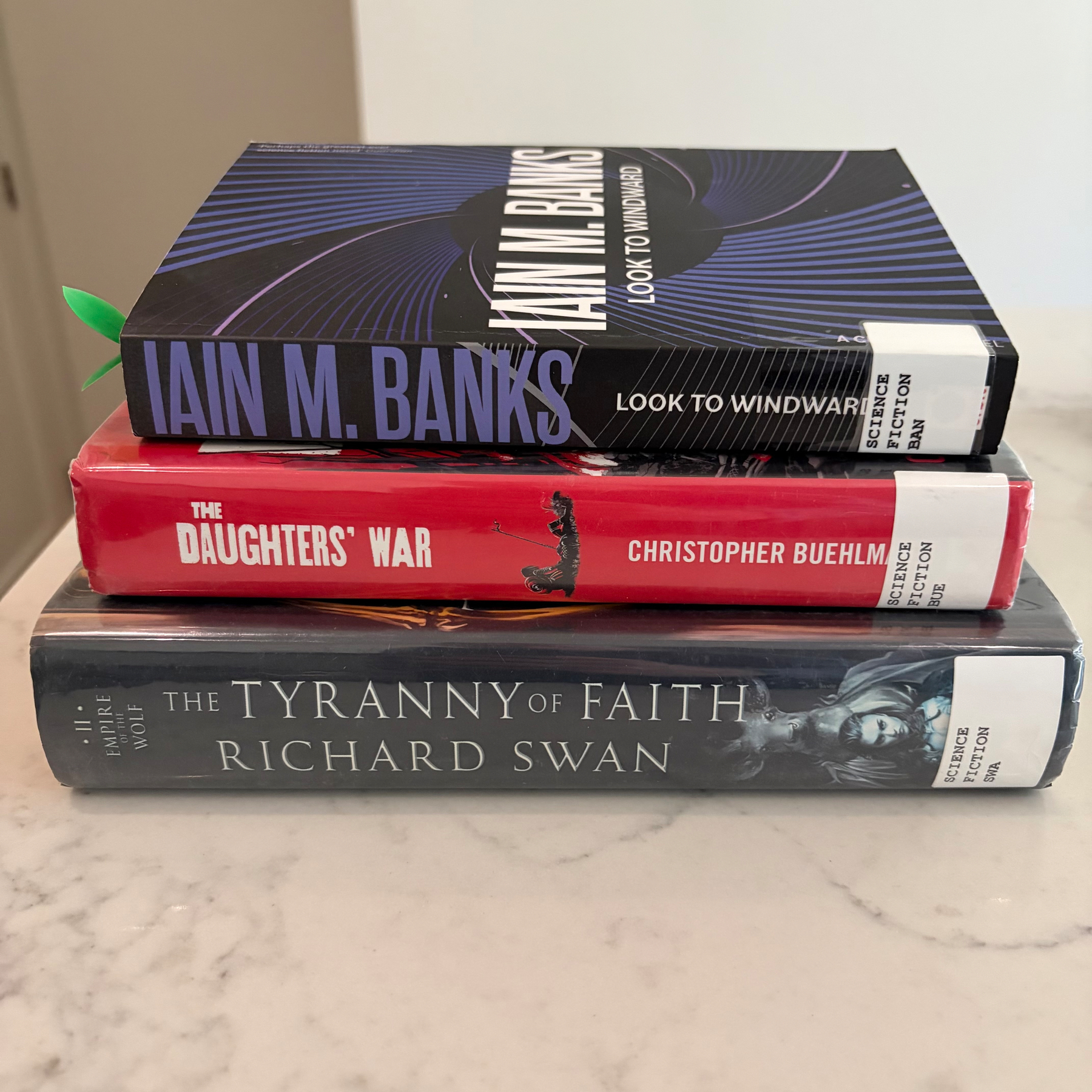
The optimized self must remain unfinished, because only the unfinished self consumes, adjusts, updates, and corrects itself.
Permanence would be inefficiency.
It is important to know when weβre actually improving something, rather than just changing it. Iβm learning to be comfortable with leaving somethings alone. I really donβt need to check out that new notes app or blogging platform. These are just self generated distractions.
Every once in a while, a result comes along that make stop and remember that heavenly objects can be pretty darn cool. This is an asteroid about half a kilometer in diameter that is spinning once every 1.88 minutes. Thatβs 112 seconds. Thatβs crazy talk.
I should read more posts like this and less about politics.
Iβve listened to, watched, and read plenty about AI. Boss Class Season 3 from The Economist is actually relevant to my job and quite entertaining ποΈ
When Our Friends Come Over by Donovan Woods & Madi Diaz from Things Were Never Good If They’re Not Good Now is a great song on a great album π΅
Finished reading: When Everyone Knows That Everyone Knows . . . by Steven Pinker is really interesting. I hadnβt appreciated how essential common knowledge (you know that I know that you knowβ¦) is to so much of what we do π
πΆ Song of the week for my daughter: Cloudbusting by Kate Bush. She knows Running Up That Hill from Stranger Things and this exposes her to more from a visionary artist.
Young Canadians are increasingly seeing homeownership as out of reach. While 86% of non-homeowners under 30 and 75% of non-homeowners between 30 and 44 still aspire to own a home one day, only 51% and 47%, respectively, are very or somewhat confident they will achieve this goal. The combination of higher interest rates, stagnant wages, and a two-decade-long increase in price-to-income ratios has made it increasingly difficult for them to qualify for a mortgage. Their ambition has turned into uncertainty, and for many, that uncertainty is turning into defeat. The issue is not willingness to buy, but rather whether they can afford to enter the market at all.
Some good recommendations in this paper. I think that part of the solution also needs to be a cultural shift away from seeing home ownership as necessarily a desired outcome. That said, for those who do want to own, we have a lot of work to do to make this possible.
In arguably one of the biggest bits of news for outdoor-focused Apple Watch owners in years, Komoot just announced true offline mapping and routing for their Apple Watch app. Up until now, their app required some sort of connectivity, notably to the phone, in order to have offline maps/routing.
This looks quite promising. I’ve been using the WorkOutDoors app for offline maps, but Komoot looks much easier.
Relentless snow! βοΈ
Finished reading: The Emergency by George Packer is a very good story about the collapse of empire, complexity of parenting, optimism of youth, and our terrible capacity to create βothersβ π
As my penance, I’m now sending her a weekly song to make sure that her musical foundation is sound. These won’t necessarily be the best, most popular, or my favourite songs (though sometimes they will be all three). Rather, they will be influential to my musical tastes and worth her consideration.
Given how this started, the first song is Solsbury Hill by Peter Gabriel. There are plenty of his songs to choose from. I think this one is a great place to start.
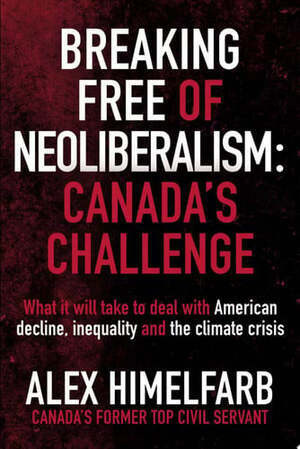
There’s a lot to like in Mark Carney’s speech at Davos. I certainly didn’t expect Thucydides and Havel to get cited.
Carney was clear about the problem. For example:
More recently, great powers began using economic integration as weapons. Tariffs as leverage. Financial infrastructure as coercion. Supply chains as vulnerabilities to be exploited. You cannot βlive within the lieβ of mutual benefit through integration when integration becomes the source of your subordination. The multilateral institutions on which middle powers reliedβ the WTO, the UN, the COPβthe architecture of collective problem solving β are greatly diminished.
Along with ideas about how “middle powers” should proceed:
This is not naive multilateralism. Nor is it relying on diminished institutions. It is building the coalitions that work, issue by issue, with partners who share enough common ground to act together. In some cases, this will be the vast majority of nations. And it is creating a dense web of connections across trade, investment, culture on which we can draw for future challenges and opportunities. Middle powers must act together because if you are not at the table, you are on the menu. Great powers can afford to go it alone. They have the market size, the military capacity, the leverage to dictate terms. Middle powers do not.
But when we only negotiate bilaterally with a hegemon, we negotiate from weakness. We accept what is offered. We compete with each other to be the most accommodating. This is not sovereignty. It is the performance of sovereignty while accepting subordination.
And a pitch for Canada:
Canada has what the world wants. We are an energy superpower. We hold vast reserves of critical minerals. We have the most educated population in the world. Our pension funds are amongst the worldβs largest and most sophisticated investors. We have capital, talent, and a government with the immense fiscal capacity to act decisively. And we have the values to which many others aspire.
Canada is a pluralistic society that works. Our public square is loud, diverse, and free. Canadians remain committed to sustainability. We are a stable, reliable partnerβin a world that is anything butβa partner that builds and values relationships for the long term.
Nor can we trust the American people to rise up against tyranny in any great numbers: they are not who they think they are, and far short of what they once were. Americans as a people today are unequal to their nationβs history and to their own sense of greatness. This is being demonstrated to us, every single day, in the clearest possible terms.
Out of a swirl of emotions that include anger and fear, I think the dominant one for me is sadness. America was obviously not perfect, but it at least had aspirations that I could admire and a long friendship with Canada that brought us both prosperity.
Of course, as Gerson points out, the real test will be what Carney and Canada do next:
In short, the Canada that Carney is describing is one that isnβt satisfied with half assery and speechifying. What would be truly provocative is if Carney didnβt just say the right things, but also demonstrated he was dead serious about following through with a plan to make this country tough enough to withstand Americaβs increasingly crazy bullshit.
Finished reading: The Second Mountain by David Brooks raises many important questions. According to Brooks, the first mountain is about personal achievement: career progression, wealth, and achievement. The second, more fullfilling mountain is about community, marriage, and religion. Although positioned as a “how to” book, Brooks provides many examples of paths to the summit of the second mountain. I think that’s appropriate. Each of us needs to find our own path, but good to know that the mountain exits and is traversable π
My right leg was signalling a potential injury. So, I converted this morningβs bike ride into a sleep in. Then had an extra coffee and listened to an episode of the Focused Podcast on Getting Intentional. Now I feel like a superhero, ready to take on the day!
Pizza night!
πΆ A mention in a Pitchfork review reminded me that Spiritchaser by Dead Can Dance is great. I hadnβt listened to it in at least twenty years.
Watched: The first few episodes of Alien: Earth Season 1 are good. Then the season gets bogged down. Several cool ideas though and definitely the creepiest sheep in TV. I’ll check out season two. The Incomparable has a good discussion of the season. πΏ
Georgeβs predecessors would be flabbergasted that heβs allowed on Grandmaβs couch
For awhile now, I’ve been archiving almost everything that I read online to Micro.blog Bookmarks. Originally this was because I was using it as my “read it later” service, but now I’m using the Reading List in Safari instead, as part of my return to defaults.
I have a vague sense that if I keep track of everything that I read, I’ll be able to analyze it in some meaningful way to identify trends or new ideas. But, I’ve never actually done this and I’m not even sure what I would learn, even if I did.
Partly in response to A Metabolic Workspace by Joan Westenberg, I’m going to stop doing this. Anything that is actually interesting, like Joan’s post, will get captured by my Commonplace entry script with which I provide at least some summary of why I captured it. Simply archiving every url has no use to me.
Otherwise, I’ll go back to using Micro.blog Bookmarks for its original purpose, which is to capture highlights in articles that I want to blog about. This workflow is good and targeted to a specific use.
A side benefit of my kids being old enough to drive, is that I actually get to hear their music now.
At home, they’re always listening with their AirPods, unlike when I was a kid. My parents had to endure our music: my brother and I both had component stereo systems with large speakers. Plus, we lived across the hall from each other, so we had to play our music loud, to be able to hear it over the other’s music!
In general, both of my kids have pretty good taste. Though, of course, some of the new music is too weird for me. I’m always pleased when I hear one of my favourites show up on their playlists. Evidence that I raised them right.