
Finished reading: Shadows of Self by Brandon Sanderson continues this entertaining series. A nice break from the “heavier” fantasy books 📚
Finished reading: Shadows of Self by Brandon Sanderson continues this entertaining series. A nice break from the “heavier” fantasy books 📚

Finished reading: I enjoyed Red Moon by Kim Stanley Robinson. Some of his usual attention to detail without getting too dry and a nice emphasis on Chinese culture and history📚

Finished reading: Although difficult to describe, I enjoyed The Factory by Hiroko Oyamada. A strange, slightly creepy story about modern work life 📚

Finished reading: The Last Graduate by Naomi Novik is a great sequel to A Deadly Education 📚

Finished reading: Empire of the Sum: The Rise and Reign of the Pocket Calculator by Keith Houston is more fun than you might expect📚

Finished reading: My Murder by Katie Williams has an intriguing premise, good twists, and is well written. A great book📚
My plan for the week


Finished reading: The Mimicking of Known Successes by Malka Older is a fun, short murder mystery on a gas giant planet 📚

Finished reading: I enjoyed My Effin’ Life by Geddy Lee more than I expected. A great testament to hard working, talented friends. Also a great excuse to revisit Rush’s music. I’d missed their last few albums and it was a pleasant surprise to discover them📚
A toasted old fashioned kind of night

🏃♂️ Misty run today

🔗
This would be a first-contact scenario involving two species that have lived side by side for ages. I wanted to imagine how it could unfold. I reached out to marine biologists, field scientists who specialize in whales, paleontologists, professors of animal-rights law, linguists, and philosophers. Assume that Project CETI works, I told them. Assume that we are able to communicate something of substance to the sperm whale civilization. What should we say?
Fascinating to think what this would be like and what we might learn
I’m enjoying their new sound

🔗
Strong Songs Season Six kicks off with a widely requested classic: Peter Gabriel’s 1986 yearner “In Your Eyes.” Because why hire one rhythm section when you can hire two for twice the price?
🎧 A favourite song on a favourite podcast

Finished reading: Although I’m far from having a crisis, I’m well into midlife. So, Midlife by Kieran Setiya was a powerful book.
I could relate, when Setiya describes what he expects to feel after he finishes writing the book:
If experience is anything to go by, the hole will be filled soon enough. There will be another project: a class to teach, a book to read, an article to write. I will move on. But the movement is like running on a treadmill. Life is a succession of projects, each one left behind, their numbers slowly adding up. What the future holds is only more of the achievements, and the failures, that make up my past. It will differ only in quantity from the life I have already lived, a mere accumulation of deeds.
I won’t spoil the outcome. Suffice it to say that this book has lots of good advice, written clearly and with humour.
Setiya also has a good session on Waking Up.
📚
🏃♂️ Back to cold, snow, and ice on today’s run

🔗
What is surprising is how poorly we still understand global ant societies: there is a science-fiction epic going on under our feet, an alien geopolitics being negotiated by the 20 quadrillion ants living on Earth today. It might seem like a familiar story, but the more time I spend with it, the less familiar it seems, and the more I want to resist relying on human analogies. Its characters are strange; its scales hard to conceive. Can we tell the story of global ant societies without simply retelling our own story?
Fascinating

Finished reading: I enjoyed Making It So by Patrick Stewart. Although not as much Captain Picard as some Trekkies might want, I appreciated the broader view of his career 📚
Great video from Casey Neistat. I too, somehow, continue to get older and am trying to hold on to some goals.
🏃♂️ Mostly trails on today’s run

🏃♂️ Nice to see some sun on today’s run along the Leslie Spit

📚 These Wheel of Time books are long! I only got 1/3 of the way through The Shadow Rising before the library loan ended
🚴♂️ Great crew for a ride up both sides of Achterbahn

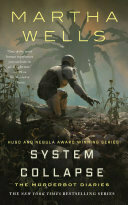
Finished reading: System Collapse by Martha Wells is another fun book in a great series📚

Finished reading: The Martian Chronicles by Ray Bradbury is rather strange. Some really lovely, poetic passages about the tranquility and beauty of Mars, coupled with buffoonish characters from Earth. I totally get this could be intentional, though it is jarring 📚

Finished reading: The Gulag Archipelago [Volume 1] by Aleksandr I. Solzhenitsyn is a remarkable book. I’ve never really comprehended the Stalin-era purges. Solzhenitsyn’s dark humour and extensive narrative details really helped make them feel horrifyingly real 📚
🏃♂️ Found some company on today’s run

New books for the new year 📚

🥶 Shortest and coldest swim of the year


Finished reading: Lords of Uncreation by Adrian Tchaikovsky is a good end to a fun series. I enjoyed the world building and premise of the trilogy which doesn’t get too serious 📚