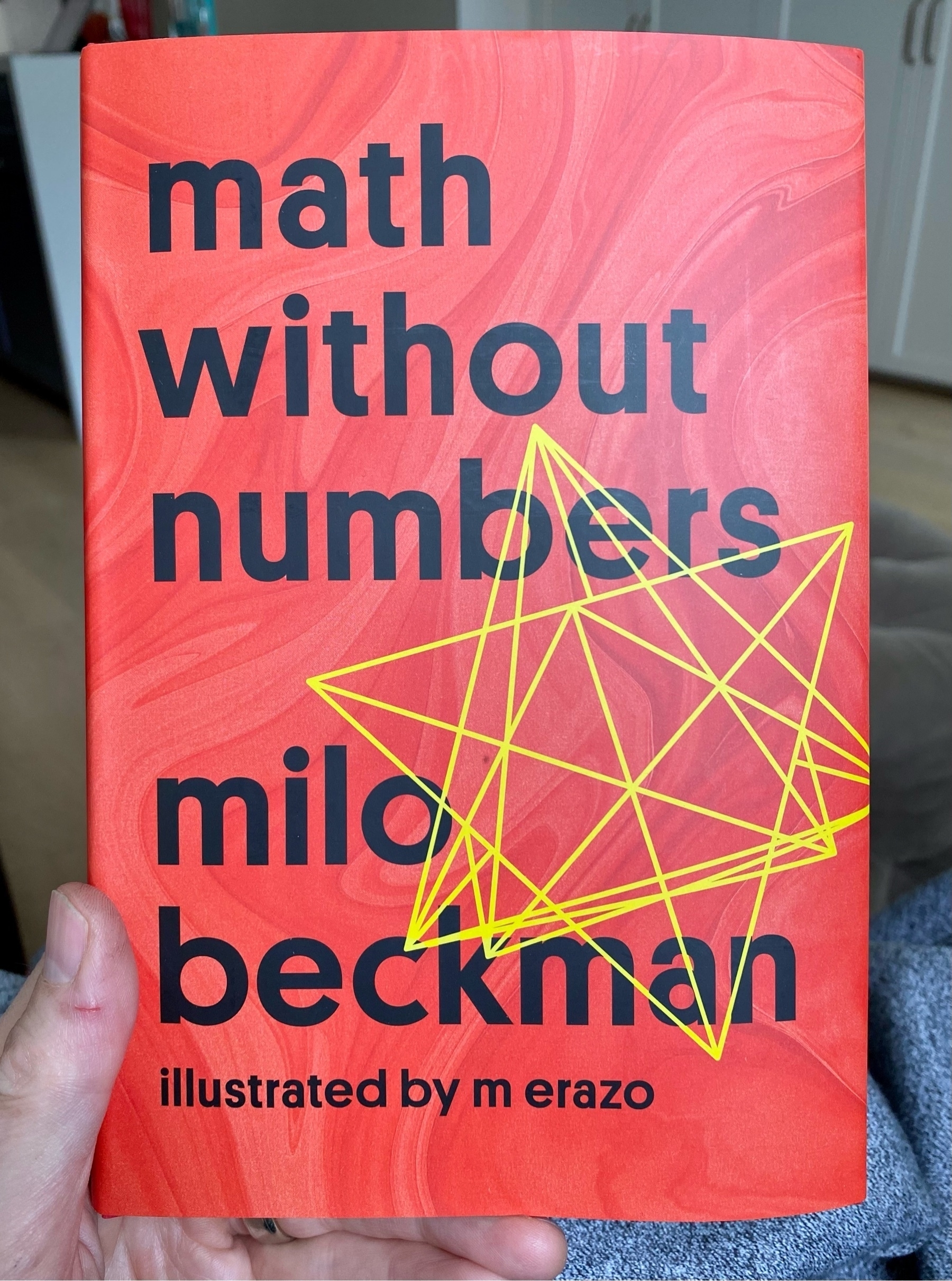
Math Without Numbers by Milo Beckman takes a conversational approach to math, saying as much about how mathematicians think as it does about the math. Removing numbers helps focus on the concepts and the delightful illustrations are just whimsical enough to match the prose📚
I won’t spoil the list, other than to say that I strongly agree with the first one: All data are created; data never simply exist. We rarely put enough thought or effort into planning how data will be generated, and then have to make up for this in the modelling phase.
Our models are always dependent on the quality of data we put into them. And, yet, we often spend much more time refining and testing our models than we do with our input data and the production process that generates them.
All of this is a way of dodging the reality of the choice in front of us: Can you subjugate your own interests—if only temporarily—for the sake of someone else? Countless someone else’s. Most of whom you will never know or even meet. Can you serve them? Can you sacrifice for any of them? Can you hear what they’re saying? Can you care?
I’m looking forward to starting Math Without Numbers by Milo Beckman 📚
Humble Pi by Matt Parker is a very entertaining book about math errors. His irreverent personality really comes through and the stories make the important point about how essential math is to our everyday lives. 📚
I’ve enjoyed listening to one of David Whyte’s poems each night before bed in the Waking Up Contemplative Action track. A good way to clear out my head
The Light of All That Falls by James Islington is a great end to The Licanius Trilogy. I was in the mood for an immersive fantasy series and these delivered, each book weighing in at close to a thousand pages. Interesting mix of fantasy, politics, time travel & free will 📚
Lucy gave up before we even started our One Academy Everest class
Wow, S2E3 of For All Mankind has a really powerful scene about parenthood. Very well done
The long way to a small, angry planet by Becky Chambers is great. I really enjoyed the characters and the sense of family on the Wayfarer. Definitely a nice change of pace from some more typical hard sci-fi stories that are more focused on the physics📚