Finished reading: The Strategy Paradox: Why Committing to Success Leads to Failure (And What to do About It) by Michael E. Raynor 📚
Finished reading: The Strategy Paradox: Why Committing to Success Leads to Failure (And What to do About It) by Michael E. Raynor 📚
Green Mars by Kim Stanley Robinson is a good second book in the Mars trilogy. So much great detail, you really get a strong sense of Mars as a place that is distinct from Earth 📚
Currently reading: Green Mars by Kim Stanley Robinson 📚
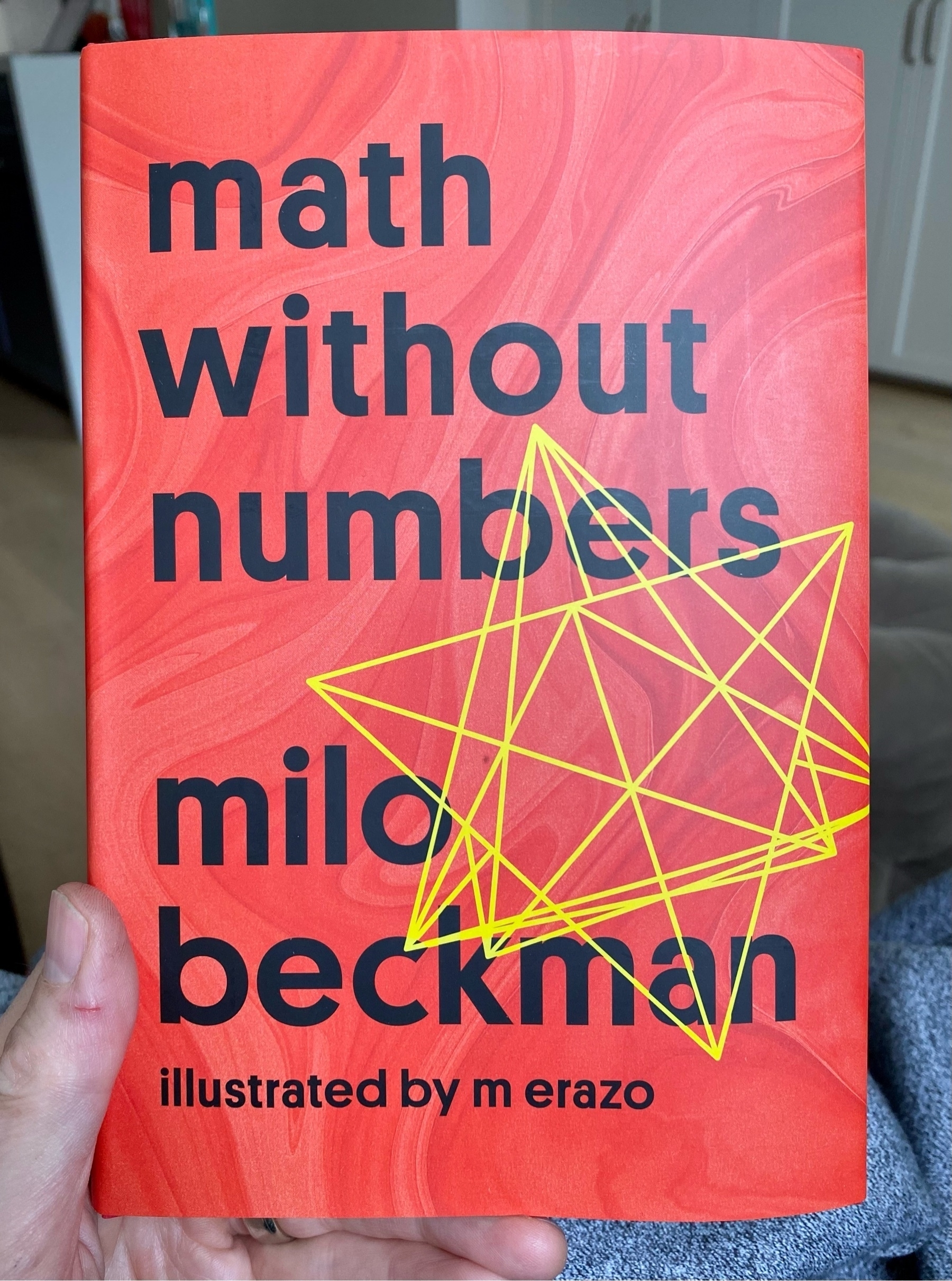
Math Without Numbers by Milo Beckman takes a conversational approach to math, saying as much about how mathematicians think as it does about the math. Removing numbers helps focus on the concepts and the delightful illustrations are just whimsical enough to match the prose📚
I’m looking forward to starting Math Without Numbers by Milo Beckman 📚
Currently reading: Limitless by Jim Kwik 📚
Currently reading: Stillness Is the Key by Ryan Holiday 📚

Humble Pi by Matt Parker is a very entertaining book about math errors. His irreverent personality really comes through and the stories make the important point about how essential math is to our everyday lives. 📚
Currently reading: Humble Pi by Matt Parker 📚
The Light of All That Falls by James Islington is a great end to The Licanius Trilogy. I was in the mood for an immersive fantasy series and these delivered, each book weighing in at close to a thousand pages. Interesting mix of fantasy, politics, time travel & free will 📚
Currently reading: The Light of All That Falls by James Islington 📚

The long way to a small, angry planet by Becky Chambers is great. I really enjoyed the characters and the sense of family on the Wayfarer. Definitely a nice change of pace from some more typical hard sci-fi stories that are more focused on the physics📚
Currently reading: The long way to a small, angry planet by Becky Chambers 📚

Seven and a Half Lessons about the Brain by Lisa Feldman Barrett is a charming, short book about how our brains work and our misconceptions about them 📚
Currently reading: Seven and a Half Lessons about the Brain by Lisa Feldman Barrett 📚

If you’re interested in how algorithms are affecting us, Hello world by Hannah Fry is a great read. Rather than explain how algorithms work, Fry describes their opportunities and risks in different parts of society, such as health, justice, and art 📚

Gideon the Ninth by Tamsyn Muir is a very imaginative and entertaining mix of sci-fi and horror 📚
Blueprint by Nicholas Christakis is an interesting book about universal feature of our societies (the social suite) and how they are based on genetics, emergent properties, and complex network effects. The book has lots of interesting examples and makes clear connections between human societies and attributes of other animals.📚
Currently reading: Gideon the Ninth by Tamsyn Muir 📚
Currently reading: Blueprint by Nicholas A. Christakis 📚

Of the 30 books that I read this year, A Memory Called Empire by Arkady Martine was my favourite fiction book. And, What is Real by Adam Becker was my favourite non-fiction one. 📚

Currently reading: Ego is the enemy by Ryan Holiday 📚

The Value of Everything by Mariana Mazzucato is an effective description of how our economy is constructed by decisions and assumptions over time. By defining value as the same as price, we confuse value creation and value extraction, which leads to many of the problems we see in today’s economic structures. Her proposals for change would help us achieve the world we’re striving for. 📚
Currently reading: The Value of Everything by Mariana Mazzucato 📚

Currently reading: The obstacle is the way by Ryan Holiday 📚
I wanted to avoid using the word border in a political context and was reminded how much I enjoyed Borderline by Mishell Baker #mbnov 📚
I really enjoyed To Be Taught If Fortunate by Becky Chambers. A little jewel of a space exploration story that really captures the spirit of scientific exploration 📚
Wednesday, November 11, 2020 →

Currently reading: To Be Taught, If Fortunate by Becky Chambers 📚

Finished reading: Breath by James Nestor. A great book about the importance of breathing. Full of interesting stories that certainly convinced me to be more thoughtful about my breath. The end of the book also has a good summary of the main points with detailed methods. 📚
Currently reading: Breath by James Nestor 📚